Using Limited Palettes to Strengthen Visual Decisions
The value of limiting choices
Working with a limited palette reduces the number of decisions you must make at once and reveals underlying colour relationships. Constraints encourage clearer mixing thinking and help achieve harmony across a painting. Instead of searching through many tubes, a narrow palette teaches how to create a wide range of hues from a few reliable pigments.
Common limited palette setups
Start with practical, widely used combinations that balance warm and cool tendencies:
- Two-colour warm/cool pair: a warm yellow and a cool blue produce a surprising range of greens and neutrals when mixed with small additions of red or brown for adjustment.
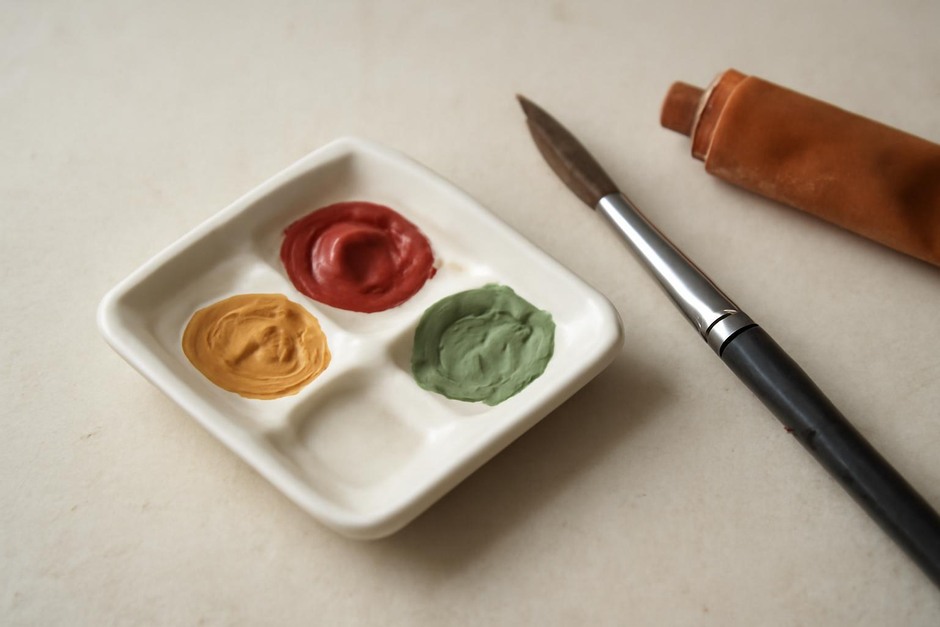
- Three-colour primary mix: a warm and cool primary selection (for example, warm red, cool blue, and a yellow) allows broad mixing without too many redundant hues.
- Earth-based trio: two earth tones plus a single stronger pigment yield muted harmonies suited to subtle, quiet compositions.
Mixing strategies
Practice mixing neutrals first. Combine complementary mixes to understand how to desaturate a colour without changing value excessively. Keep a note of proportions that produce useful intermediates; small adjustments can dramatically change a colour’s temperature.
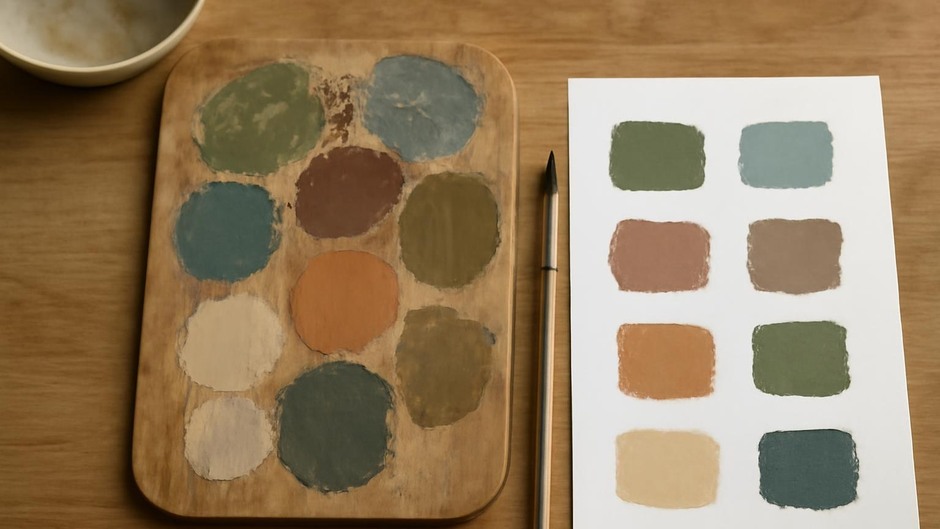
Use a small set of swatches to test mixtures before committing to paint on a composition. Swatching clarifies whether a mixture reads warm enough or too cool and helps avoid mid-work surprises.
Benefits for composition and cohesion
A limited palette fosters visual cohesion because colours are derived from the same small family of pigments. This unifies disparate parts of an image and reduces the risk of one area appearing unrelated. It also simplifies decisions about accents: a single brighter mixture used sparingly will read as intentional rather than arbitrary.
Exercises to deepen understanding
- Monochrome study: paint a small study in a single pigment to focus on value and edge without colour complexity.
- Two-paint challenge: create a scene using only two pigments plus white, exploring the full range of mixtures they offer.
- Harmony check: paint a composition, then repaint it immediately with a different limited palette to notice how colour choices alter mood.
When to expand the palette
Limited palettes are a learning tool and a stylistic choice. Expand when a project requires colours outside your range, but consider maintaining a core limitation most of the time. Returning to constraint after working with many pigments often reveals clearer decisions and deeper mixing control.
Ultimately, the discipline of a limited palette trains both perception and technique. It clarifies which colour relationships are most important to a composition and strengthens confidence in mixing. Over time, the limits become a productive framework for creative exploration rather than a restriction.