Composition Principles for Calm and Clear Images
Composition as visual decision-making
Composition organizes elements so that an image reads clearly and calmly. Rather than a set of rigid rules, composition offers principles that help you decide where to place forms, how to lead the eye, and how to balance visual weight. Practicing these principles strengthens the ability to make concise decisions that serve the subject.
Establish a clear focal point
Decide what you want the viewer to notice first. A focal point can be defined by contrast, edge sharpness, colour, or placement. Once you identify the primary element, support it with secondary elements that guide the eye and create context without competing. Visual hierarchy—primary, secondary, tertiary—helps arrange those relationships.
Balance and visual weight
Balance does not mean symmetry. Visual weight derives from size, contrast, colour saturation, and position. A small, dark object near the edge can counterbalance a larger, lighter mass elsewhere. Consider the overall distribution of weight across the picture plane and nudge elements until the composition feels stable without being static.
Use negative space deliberately
Negative space communicates scale and focus. Leaving breathing room around a subject can emphasize its presence and create a calm atmosphere. Pay attention to the shapes formed by empty areas; these shapes should have their own integrity and support the composition rather than creating awkward voids.
Lead the eye with paths and edges
Lines, edges, and implied paths guide the viewer. Use diagonals to suggest movement, horizontal bands to convey calm, and verticals for formality or stillness. The interplay of directional cues should direct attention toward the focal point and then allow exploration of supporting details.
Crop with intention
Cropping is a compositional tool. Tight crops can heighten intimacy, while generous crops offer context. When cropping, consider how edges cut forms and how those cuts influence rhythm and balance. A deliberate crop omits irrelevant detail and clarifies the image’s structure.
Repeat, simplify, and vary
Repetition and variation create rhythm. Repeating a shape or colour can unify an image, while introducing a slight variation maintains interest. Simplify when possible: remove elements that do not support the central idea. Sometimes clarity comes from subtraction rather than addition.
Practice with small studies
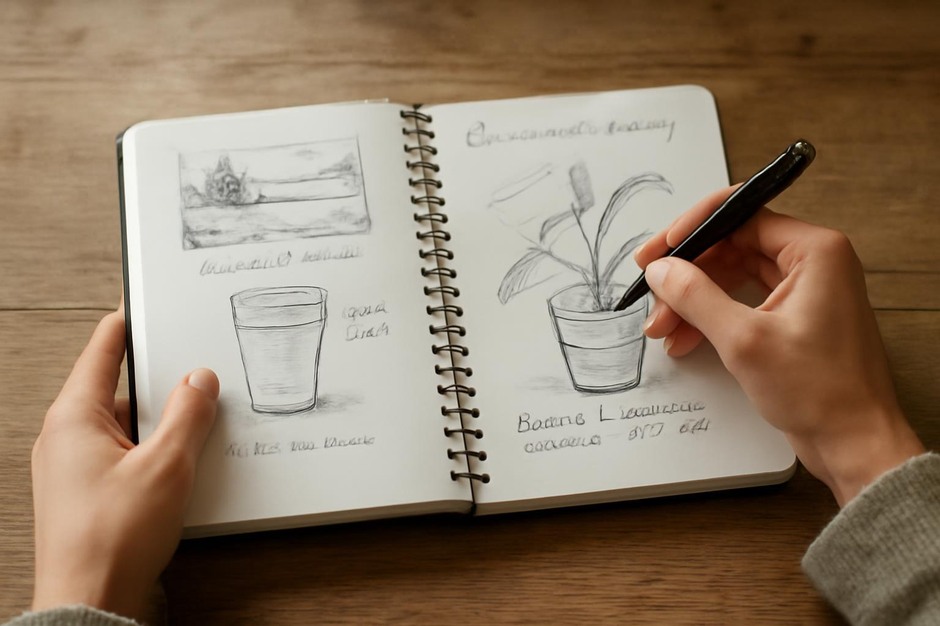
Make quick thumbnails to explore compositional options. Thumbnails free you from detail and allow rapid experimentation with scale, placement, and value relationships. A small, considered sketch often reveals stronger compositional choices than prolonged work on a single layout.
Composition is an ongoing conversation between intention and perception. By practicing focal emphasis, balance, negative space, and economy, images gain clarity and composure. These principles are adaptable to any medium and support confident visual decisions.