Creative Observation: Training Your Eye to Notice
Observation as a craft
Creative observation is an active skill. It involves slowing down enough to notice relationships of light, shape, texture, and rhythm, and then recording those observations in ways that are useful for later work. Good observation produces reliable visual notes rather than exhaustive detail.
Look with questions
Approach a subject with a short list of questions: What is the dominant value? Where are edges crisp or soft? What small detail changes the feeling of the whole? These questions focus attention and prevent overwhelm. Over time, they become habitual and make seeing more efficient.
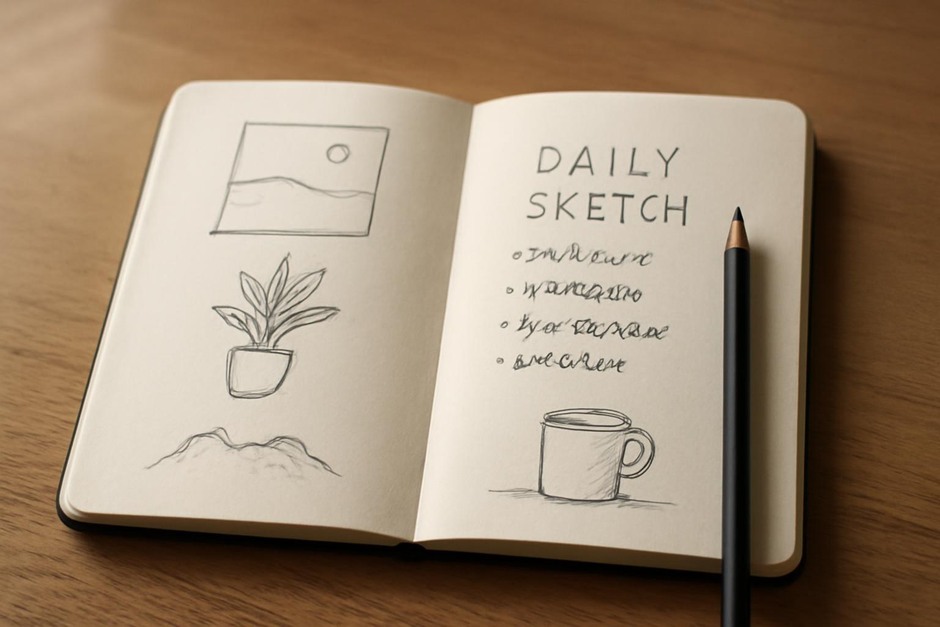
Make selective sketches
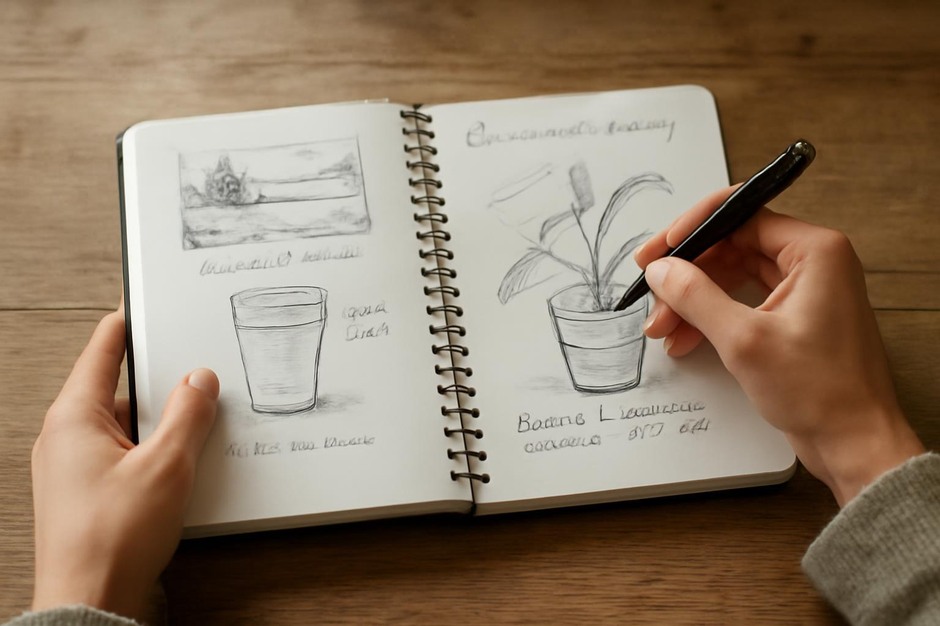
Instead of attempting to record every detail, choose one or two aspects to emphasize—gesture, proportion, or a texture. Use quick sketches to isolate and understand those qualities. Selectivity leads to more meaningful notes and avoids capturing information you will not use.
Use varied tools for different kinds of observation
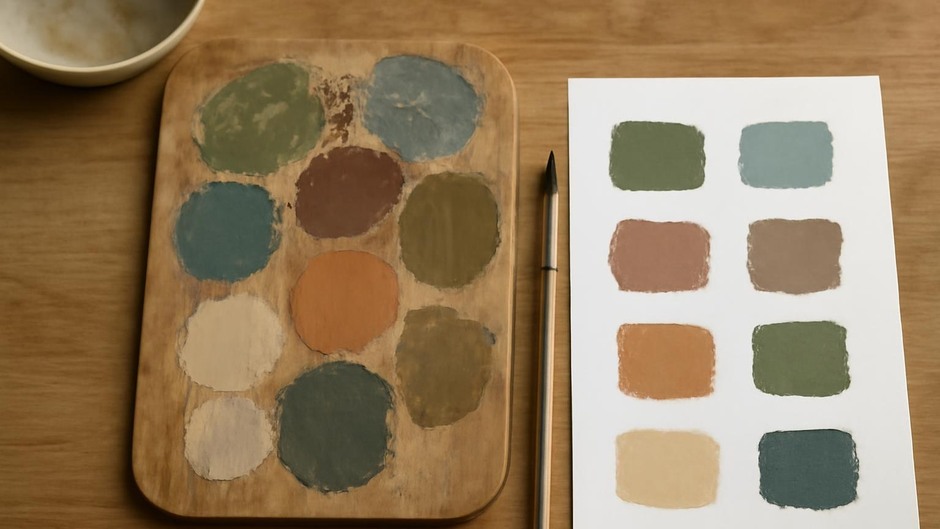
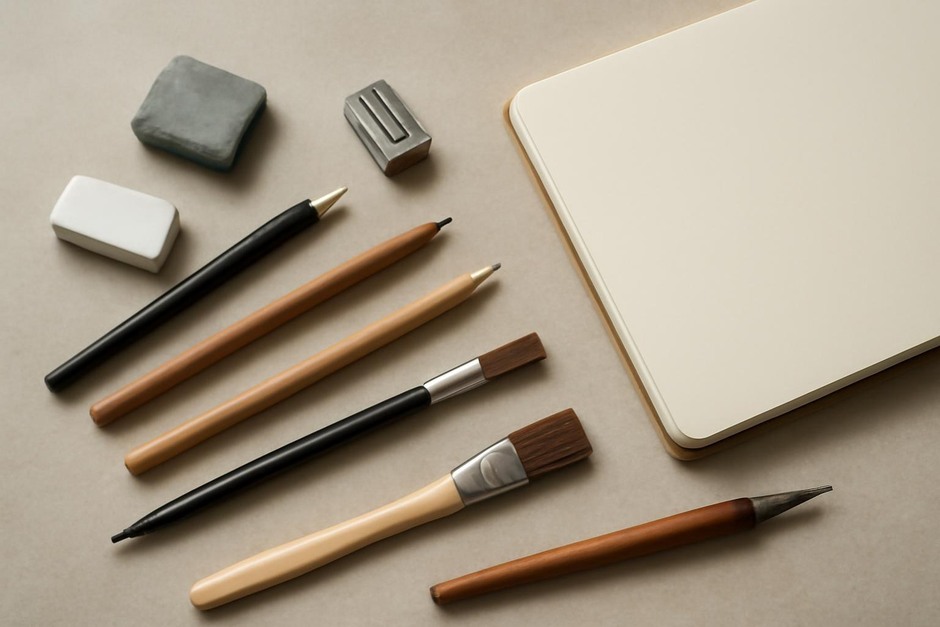
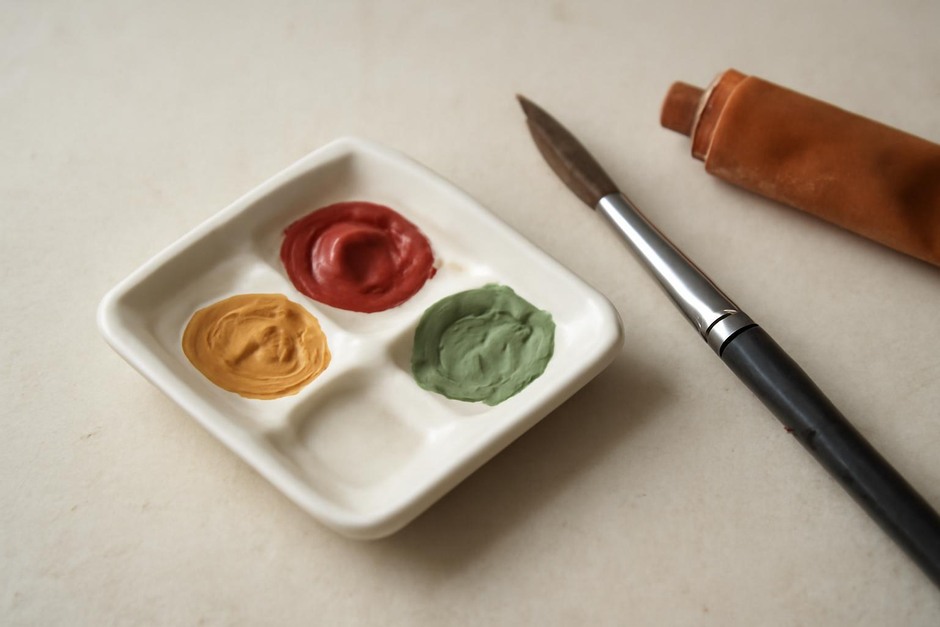
Different tools reveal different aspects. A soft pencil captures tone and gesture quickly; a pen clarifies line and rhythm; coloured media suggest temperature and local colour. Rotate tools across sessions to build a fuller understanding of subjects without trying to do everything at once.
Time-box observations
Short focused observations sharpen perception. Spend three minutes on contour, three minutes on tone, and three minutes on a colour impression. Time limits encourage decisive marks and prevent getting lost in detail. They also help replicate conditions across sessions so you can compare and learn.
Create a visual vocabulary
Over time, consistent observation builds a library of marks and shorthand gestures—simple ways to indicate texture, shadow, and light without laborious description. Catalog recurring solutions in the sketchbook: a hatch for grit, a scumbled wash for soft foliage, a clipped contour for a reflective edge. These visual shortcuts accelerate later work and support clearer translation from observation to finished pieces.
Compare direct observation with memory
Periodically sketch from memory after observing a scene. This comparison reveals which details your visual system prioritizes and which are lost. The exercise strengthens visual memory and helps you decide what to record in future observations.
Observe with purpose
Make observation purposeful by assigning small goals: study how shadow temperature varies across a day’s light, or note how a surface reflects nearby colours. Purpose narrows focus and yields transferable insights. Observation is most effective when tied to a question you can test in subsequent sessions.
Creative observation is a practiced habit. With intentional questions, selective sketching, varied tools, and timed experiments, the eye becomes more reliable and expressive. These methods transform casual looking into productive, repeatable work that feeds both sketchbooks and finished projects.